Is the route ready for your new machine?
(English Below) 🇵🇹
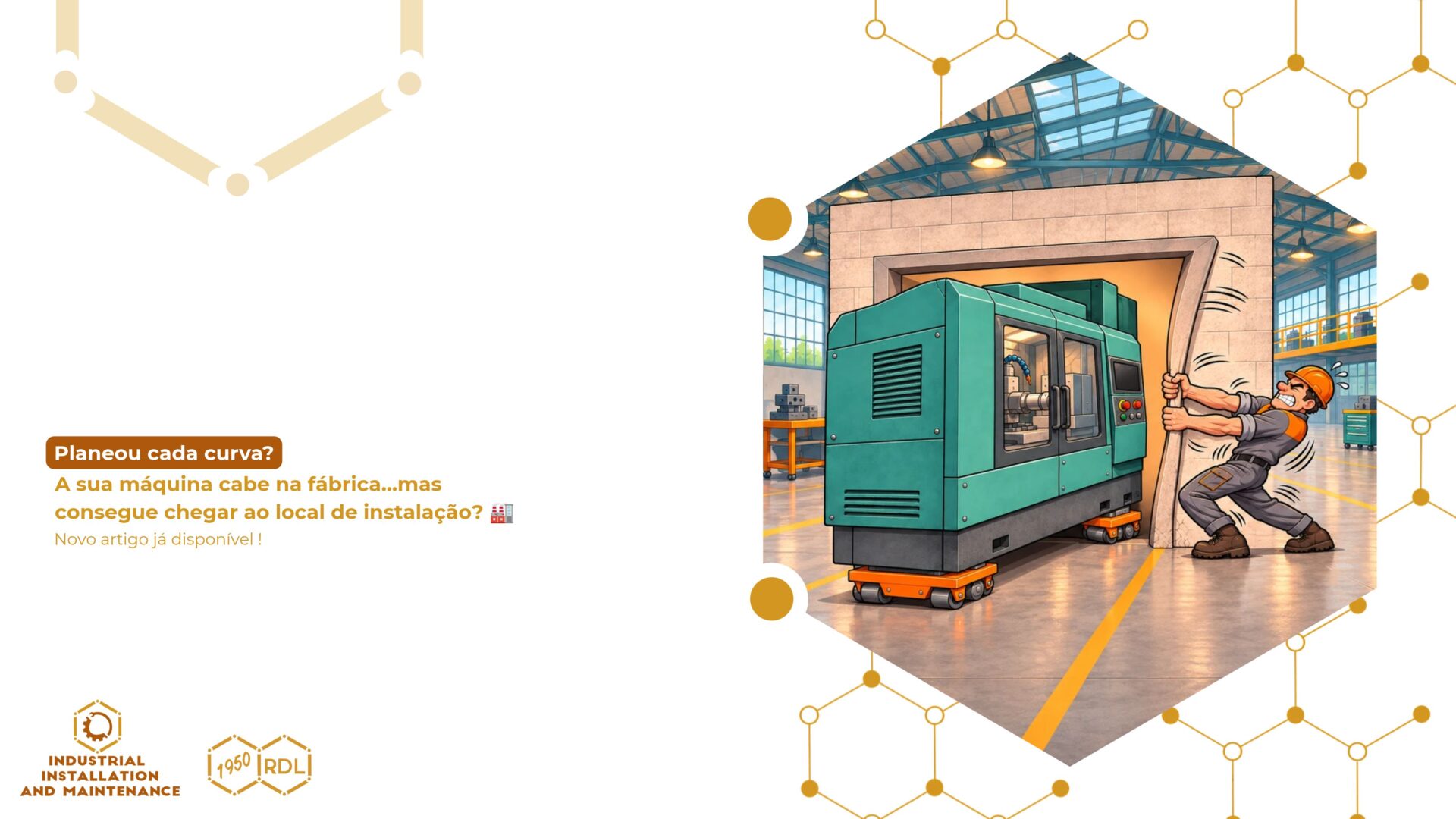
Antes de chegar à fábrica, a máquina já tem de ter um percurso definido. Da zona de descarga até ao ponto de instalação, é preciso garantir que passa por todas as portas, faz todas as curvas e pode ser movimentada em segurança.
📏 Medir o percurso, porta a porta
Uma porta pode ter largura suficiente para a máquina passar em linha reta. Se houver uma curva logo a seguir, pode faltar espaço para a rodar. E se o equipamento chegar sobre uma base de transporte, a altura total pode ser superior à indicada na ficha técnica.
Por isso, o levantamento deve considerar as dimensões da máquina na configuração em que será movimentada. Ao longo do percurso, importa verificar as aberturas úteis, o espaço de manobra nas curvas, os desníveis e os obstáculos em altura. O peso do equipamento e a capacidade do piso também condicionam a escolha dos meios de movimentação.
🔧 Deixar espaço para a manutenção
Quando a máquina fica na posição final, é preciso conseguir abrir os painéis, aceder aos pontos de inspeção e retirar componentes para manutenção. Uma máquina pode caber no espaço previsto e, ainda assim, ficar demasiado próxima de uma parede para permitir a substituição de uma peça.
Prever estas intervenções na fase de planeamento ajuda a evitar alterações à disposição da fábrica e facilita o trabalho das equipas de manutenção.
🤝 Ruy de Lacerda
Na Ruy de Lacerda, o planeamento da instalação começa com uma pergunta prática: como vai a máquina chegar ao seu lugar e que espaço será necessário para a manter ao longo dos anos?
Responder a esta pergunta antes da entrega dá às equipas tempo para preparar o percurso, organizar a movimentação e garantir os acessos necessários para futuras intervenções.
A Ruy de Lacerda, apoia a indústria na movimentação de equipamentos, desde o planeamento do percurso até à instalação e ao arranque. A sua equipa apoia também mudanças de fábrica, reorganização de linhas de produção e manutenção de equipamentos.
🇬🇧
Is the route ready for your new machine?
Before the machine arrives at the factory, its route needs to be planned. From the unloading area to the installation site, the machine must fit through every doorway, make every turn and be moved safely.
📏 Measuring the route, doorway by doorway
A doorway may be wide enough for the machine to pass straight through. If there’s a turn immediately afterwards, there may be too little room to manoeuvre. And if the equipment arrives on a transport base, its overall height may exceed the figure on the technical data sheet.
The site survey should therefore use the machine’s dimensions as it will be moved. Along the route, check the clear width and height of openings, the manoeuvring space at turns, any changes in floor level and any overhead obstructions. The equipment’s weight and the floor’s load-bearing capacity also affect the choice of handling equipment.
🔧 Leaving room for maintenance
Once the machine is in its final position, maintenance teams need enough room to open panels, access inspection points and remove components. A machine may fit in the designated space and still be too close to a wall for a part to be replaced.
Planning for these tasks early helps avoid later changes to the factory layout and makes maintenance easier.
🤝 Ruy de Lacerda
At Ruy de Lacerda, installation planning starts with a practical question: how will the machine reach its final position, and how much space will be needed to service it over the years?
Answering this question before delivery gives teams time to prepare the route, coordinate the move and make sure the machine can be accessed for future servicing.
Ruy de Lacerda helps industrial companies move equipment, from route planning through installation and start-up. Its team also supports factory relocations, production line reorganisation and equipment maintenance.